
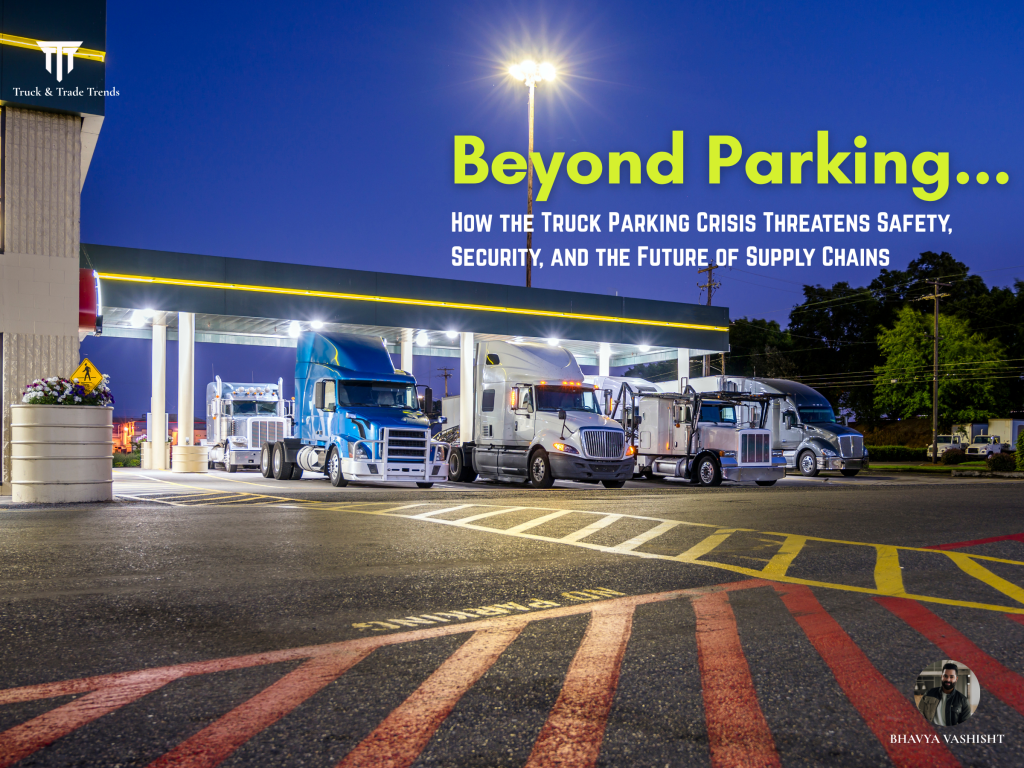
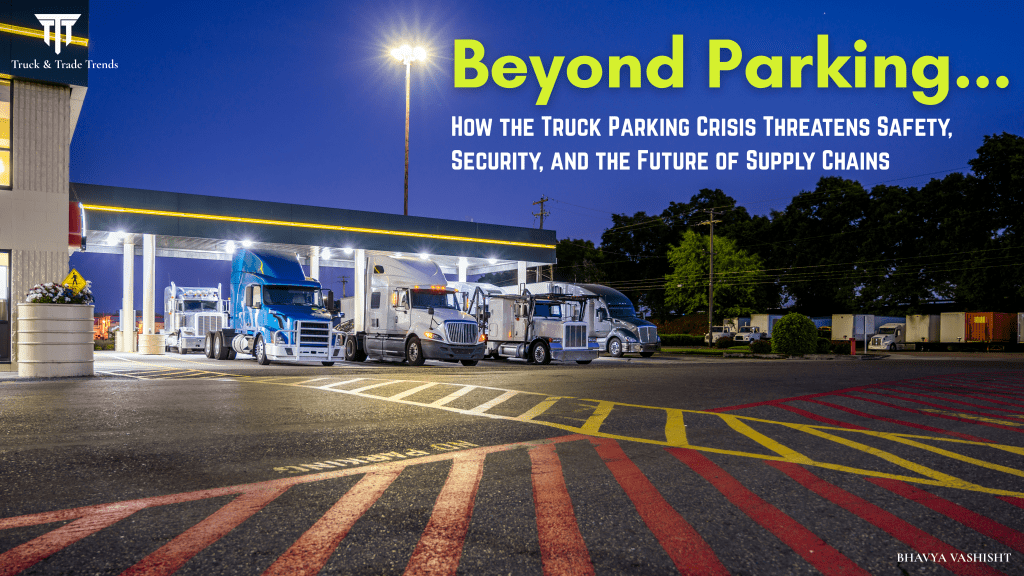
If you’ve spent even a week in the U.S. trucking business, you know the parking shortage is more than just a “driver hassle.” The headlines make it sound like an inconvenience, but out on the highway, it’s a slow-burn crisis undermining the entire logistics system. Ignore it, and we risk far more than a tired driver and a delayed load; we risk supply chain reliability, cargo security, and road safety for everyone.
The Supply Chain Ripple: Not Just a Driver Problem
When drivers cannot find safe, legal parking, the ripple effect goes straight up the supply chain. A driver running tight on Hours of Service spends the last hour of their legal drive time searching for a spot instead of driving to a consignee. That’s not just a lost hour. It’s a delayed load, a missed appointment, and often, a fine for being late. Shippers end up paying higher detention and layover fees, carriers scramble to reshuffle schedules, and receivers see their Just-in-Time (JIT) inventory strategies thrown out the window.
This is not theory, it’s daily reality. One Illinois-based dispatcher told me, “We build slack into every delivery plan now, just because parking has become the wild card.” Drivers will sometimes pull over 90 minutes before their legal time runs out, fearing they won’t find parking later. That means less efficient trucking operations, more trucks parked on highway shoulders, and more pressure on already-thin margins.
Hidden Hazards: Parking Shortages and Cargo Theft
Here’s the part many outside the industry miss: parking scarcity isn’t just an efficiency issue. It’s a serious security threat. With safe parking in short supply, drivers are forced to settle for poorly lit, unsecured lots, or worse, highway ramps and industrial zones. Organized cargo theft rings know this. According to recent supply chain updates, the spike in cargo theft nationwide in the past year closely tracks regions with severe truck parking shortages.
In Texas last fall, a refrigerated load carrying over $120,000 in goods was stolen while the driver slept in a makeshift lot behind an abandoned warehouse, there simply wasn’t anywhere safer to stop. For criminals, desperate drivers are easy prey. It’s not an exaggeration to say the parking crisis is fueling a parallel crisis in cargo security.
Rest, Safety, and Compliance: The Risks Nobody Sees
The Hours of Service (HOS) rules were designed to keep fatigued drivers off the road. But here’s the compliance headache nobody admits: lack of parking makes it nearly impossible for many drivers to follow the law without risking personal safety or breaking delivery commitments. The irony is brutal; drivers are pushed to choose between legal compliance, safety, and keeping the supply chain moving.
Industry surveys show nearly 70% of drivers have parked illegally at least once in the past month, just to avoid exceeding their HOS or falling asleep at the wheel. This isn’t just an operational headache. It’s a public safety risk. When a fatigued driver parks on a ramp, or keeps driving to find a safe stop, everyone on the road is exposed.
Building for the Future: Why Solutions Lag Behind
If the problem is obvious, why is it still unsolved? It’s not for lack of attention. In the past year, both the American Trucking Associations (ATA) and the Federal Motor Carrier Safety Administration (FMCSA) have put out supply chain updates and calls for funding. There are new public-private partnerships, like the Florida Rest Stop Initiative, which has added over 500 parking spaces in just two years. Pennsylvania has leveraged logistics technology to pilot smart parking lots that use sensors and apps to show real-time space availability.
But the obstacles run deep: outdated zoning rules, funding bottlenecks at the state and federal level, and NIMBY (“Not In My Backyard”) opposition from local communities that don’t want trucks near residential areas. Even when funds are allocated, it can take years for new rest areas to be built due to environmental reviews and land acquisition hurdles.
What Can Be Done: Actionable Steps and Industry Leadership
So, how do we actually move forward? Here are practical, hard-won solutions from across the industry:
- Invest in Smart Parking Technology: Carriers and states should collaborate on digital platforms that show real-time parking availability, reducing wasted miles and stress for drivers.
- Rethink Zoning and Funding: Industry associations must work with lawmakers to reform zoning laws that block new parking developments, and push for dedicated funding streams, separate from highway maintenance budgets.
- Expand Public-Private Partnerships: Shippers, receivers, and logistics parks can offer secured parking for long-haul trucks, especially in major freight corridors.
- Raise Cargo Security Standards: Warehouses and truck stops need to be part of the cargo security solution, with surveillance and controlled access.
But more than anything, we need a mindset shift: everyone in the supply chain, from dispatch to final mile, must treat parking as a core operational factor not an afterthought.
The Bottom Line: A Collective Challenge
The parking crisis is a warning sign. It’s showing us where our supply chain infrastructure is fragile, exposing gaps that can be exploited by both inefficiency and crime. If you care about on-time delivery, fleet optimization, driver safety, or the cost of logistics, you have a stake in fixing this. The solution won’t come overnight, but it will only come if we recognize this is everyone’s problem.
For trucking trends, supply chain updates, and real talk from inside the industry, keep following Truck & Trade Trends. It’s time to move the parking crisis from the margins to the center of the logistics conversation and lead the way toward lasting change.
 Truck & Trade Trends
Leave a comment