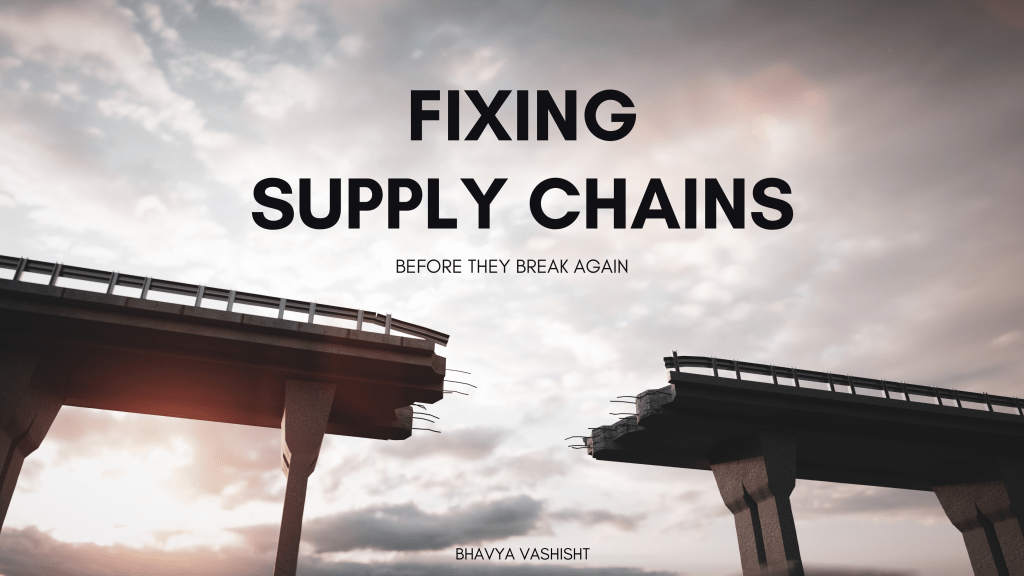
Imagine walking into your favorite store, only to find the shelves completely bare. No essential items, no everyday products – just emptiness. Now, was this COVID-19 ? Not necessarily. History has shown us that supply chain disruptions are nothing new.
Take, for instance, the great toilet paper shortage of 1973. It wasn’t caused by a pandemic, a raw material crisis, or manufacturing failures. Instead, it stemmed from a joke – yes, a joke – by the late-night talk show host Johnny Carson. A simple comment about a possible shortage led to mass panic buying, which, ironically, created the very shortage people feared. Fast forward to recent years, and the world once again saw similar patterns unfold in the wake of COVID-19.
The truth is, supply chain challenges have existed for decades. While each crisis presents its own unique hurdles, companies have largely relied on the same old playbook: buffer stocks, diversifying suppliers, and better forecasting. But if these strategies were the ultimate solution, why do supply chain failures still occur so frequently? The answer lies in the trade-off between resilience and efficiency. Businesses prioritize cost-cutting and just-in-time production until a crisis strikes. Once the crisis passes, companies revert to old habits, leaving vulnerabilities exposed for the next disruption.
So how do we move forward? The future of supply chains doesn’t just demand resilience, it demands innovation. Here are three radical ideas that could transform supply chain management as we know it:
1. Shared Risk: A Supply Chain Insurance Model
In business, as in life, uncertainty is inevitable. That’s why industries like healthcare and finance rely on insurance to pool risk and mitigate financial shocks. Why not apply the same concept to supply chains?
Imagine a system where companies across an industry contribute to a shared pool of critical raw materials, components, or even manufacturing equipment. These resources would be maintained and accessible only in times of crisis. Think of it as an industry-wide safety net; one that ensures businesses can continue operating even when supply chain disruptions occur. This model wouldn’t just help companies avoid costly shortages; it would also prevent price gouging and market instability during times of crisis.
Consider the pharmaceutical industry. Many countries stockpile medicines, but very few keep reserves of active pharmaceutical ingredients (APIs). If companies shared the cost of storing these essential ingredients, drug manufacturers could continue production even when global supply chains falter. Rather than hoarding excess inventory individually, a costly and inefficient approach, industries could collaboratively prepare for the inevitable.
2. Radical Transparency: Mapping the Supply Web
Most companies think they have a diversified supply chain, but in reality, they operate within a tightly interconnected web. One failure in the chain can cause ripple effects across multiple industries.
Take the microchip shortage that affected everything from cars to gaming consoles. When automakers cut chip orders during the early months of COVID-19, semiconductor manufacturers redirected supply to the booming consumer electronics market. By the time automakers realized demand had rebounded, the chips were no longer available. The real issue? Auto companies had little visibility beyond their immediate suppliers, they didn’t realize they were competing with tech giants for the same critical resource.
A resilient supply chain requires deep visibility, not just into direct suppliers, but into their suppliers, and their suppliers’ suppliers. By creating real-time, data-driven supply maps, businesses can anticipate bottlenecks before they escalate into full-blown crises. Supply chain managers must move beyond tracking purchase orders and instead analyze global trends that could affect their raw materials, manufacturing, and distribution.
3. AI-Powered Decision-Making: Predicting and Preventing Disruptions
Supply chain managers have traditionally been reactive, adjusting plans based on past disruptions. But with the rise of artificial intelligence and machine learning, we can transition from reactive to proactive decision-making.
AI-powered analytics can sift through millions of data points; weather patterns, geopolitical events, labor strikes, raw material price fluctuations, and predict potential risks before they materialize. More importantly, AI can offer real-time recommendations on how to mitigate these risks. For example:
- If a hurricane is set to impact a key shipping route, AI could suggest alternative logistics plans before disruptions occur.
- If a supplier shows signs of financial distress, AI could alert businesses to secure backup sources before a failure happens.
- If demand for a particular material suddenly surges, AI could predict shortages and recommend proactive purchasing.
The airline industry already uses similar systems to reroute passengers during travel disruptions. There’s no reason why supply chains can’t adopt the same level of intelligence to ensure goods keep flowing smoothly.
The Path Forward: Innovation Over Complacency
History has proven that supply chain disruptions are inevitable. From natural disasters to pandemics, from geopolitical tensions to cyberattacks; challenges will continue to arise. The question isn’t whether disruptions will happen, but whether companies will be prepared when they do.
Relying on outdated methods and reactionary responses is no longer enough. Businesses must embrace shared risk models, radical transparency, and AI-driven decision-making if they want to build supply chains that can withstand the next big crisis.
The good news? These ideas are already within reach. The challenge lies in execution. Will companies take the necessary steps before the next disruption, or will history continue to repeat itself? The choice is ours to make.
 Truck & Trade Trends
Leave a comment