
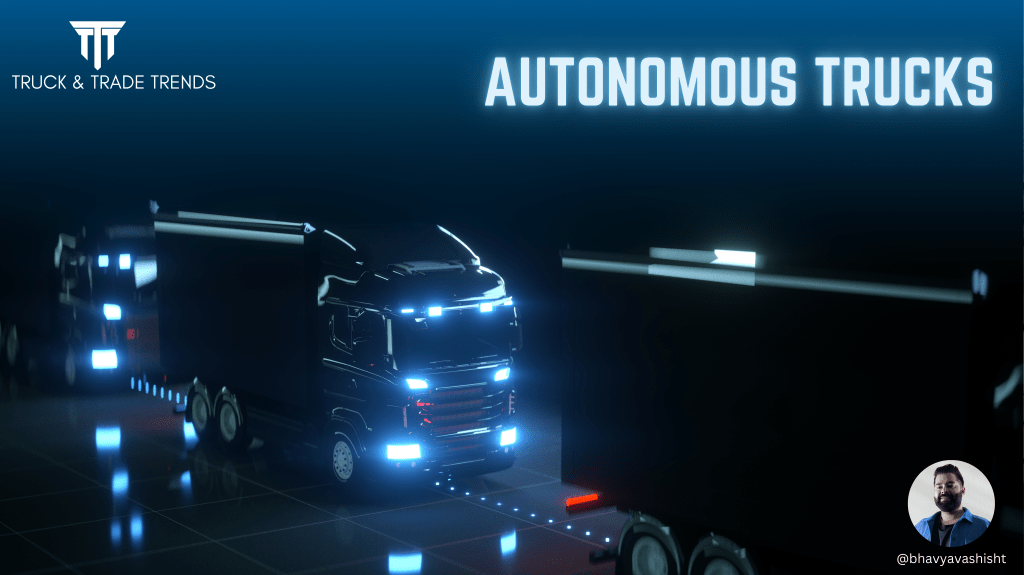
The trucking industry is undergoing a major transformation, with autonomous technology playing a pivotal role in reshaping logistics and supply chain operations. While much of the attention on autonomous vehicles has focused on last-mile delivery and long-haul trucking, the middle-mile segment is emerging as a key area where automation is proving to be highly effective.
Understanding Middle-Mile Logistics
Middle-mile logistics refers to the transportation of goods between distribution centers, fulfillment hubs, and retail stores. Unlike long-haul trucking, which involves cross-country freight transport, or last-mile delivery, which deals with direct-to-consumer shipments, middle-mile operations are typically shorter in distance but crucial in ensuring supply chain efficiency.
With e-commerce growing at an unprecedented rate, businesses are increasingly investing in ways to optimize middle-mile deliveries to improve speed, reduce costs, and enhance reliability. Autonomous trucks are emerging as a game-changer in this segment, offering a range of benefits that traditional trucking methods struggle to match.
Why Autonomous Trucks Are Gaining Traction in Middle-Mile Logistics
- Operational Efficiency – Autonomous trucks can operate around the clock without the constraints of human driver fatigue or hours-of-service (HOS) regulations. This allows for faster, more consistent delivery schedules.
- Cost Reduction – With driver wages accounting for a significant portion of trucking expenses, automation presents an opportunity to reduce operational costs. Although autonomous technology requires high initial investment, it can lead to long-term savings.
- Increased Safety – Human error is a leading cause of road accidents. Autonomous trucks, equipped with advanced sensors, LiDAR, and AI-powered navigation systems, can enhance road safety by minimizing risks associated with driver fatigue and distraction.
- Addressing Driver Shortages – The trucking industry has been grappling with a chronic driver shortage, making automation a viable solution to bridge the workforce gap, especially for short and repetitive middle-mile routes.
- Predictable and Repetitive Routes – Middle-mile logistics often involves fixed routes between warehouses and distribution centers, making them ideal candidates for autonomous trucking technology. Unlike long-haul trips with unpredictable variables, middle-mile routes can be optimized for automated systems.
Real-World Adoption and Challenges
Several companies are already piloting autonomous middle-mile trucking solutions. Industry leaders such as TuSimple, Aurora, Gatik, and Waymo Via have successfully integrated self-driving technology into middle-mile operations. For instance, Gatik has partnered with Walmart and Kroger to deploy autonomous box trucks for short-haul deliveries between fulfillment centers and retail stores.
However, challenges remain:
- Regulatory Uncertainty – Many states in the U.S. have different regulations regarding autonomous trucking, making widespread deployment complex.
- Technological Maturity – While autonomous trucks are highly advanced, they still require human intervention in certain situations, limiting full autonomy.
- Public Perception and Acceptance – Concerns over job displacement, liability in case of accidents, and general skepticism about AI-driven vehicles remain hurdles in large-scale adoption.
The Future of Middle-Mile Autonomous Trucking
Despite the challenges, autonomous middle-mile trucking is expected to grow rapidly in the coming years. As technology improves, regulatory frameworks evolve, and logistics companies continue to embrace automation, middle-mile logistics will likely become a proving ground for autonomous vehicle adoption before full-scale deployment in long-haul operations.
With efficiency, cost-effectiveness, and reliability at the core of its benefits, the rise of autonomous trucks in middle-mile logistics is not just a trend but a significant shift in the future of supply chain operations. As adoption accelerates, businesses that leverage autonomous solutions will gain a competitive edge in an increasingly demanding logistics landscape.
Autonomous trucking in middle-mile logistics isn’t just about replacing drivers, it’s about redefining efficiency, sustainability, and the future of supply chain management.
Bhavya Vashisht
 Truck & Trade Trends
Leave a comment